Why Is the Animal Nutrition Industry Set to Grow? The answer begins with a practical challenge: farmers must produce more animal protein while managing feed costs, animal health, and environmental pressures. Nutrition sits at the center of that effort. A well-balanced ration can support growth, reproduction, and feed efficiency; a poorly matched one can waste ingredients and money. Think of a feed mill adjusting a formula as grain prices shift, or a poultry house where steady access to clean water changes how birds use their feed.
The question “what is the future of animal nutrition industry” points toward more precise, evidence-led feeding. Researchers and producers are exploring enzymes, amino acids, probiotics, and alternative protein sources, while digital tools can help track intake and animal performance. These approaches are not automatic solutions. Results vary by species, farm conditions, ingredient quality, and how carefully a new formulation is tested.
Animal scientist Temple Grandin has said, “I think using animals for food is an ethical thing to do, but we’ve got to do it right.” Her words are not a forecast about feed markets, but they underline why responsible nutrition matters. Better diets may help producers use resources more carefully and support animal well-being. Still, technology alone cannot fix weak management or inconsistent feed quality. That is easy to overlook. The industry’s growth will depend not only on new products, but also on reliable trials, transparent claims, and practical advice that works on real farms.
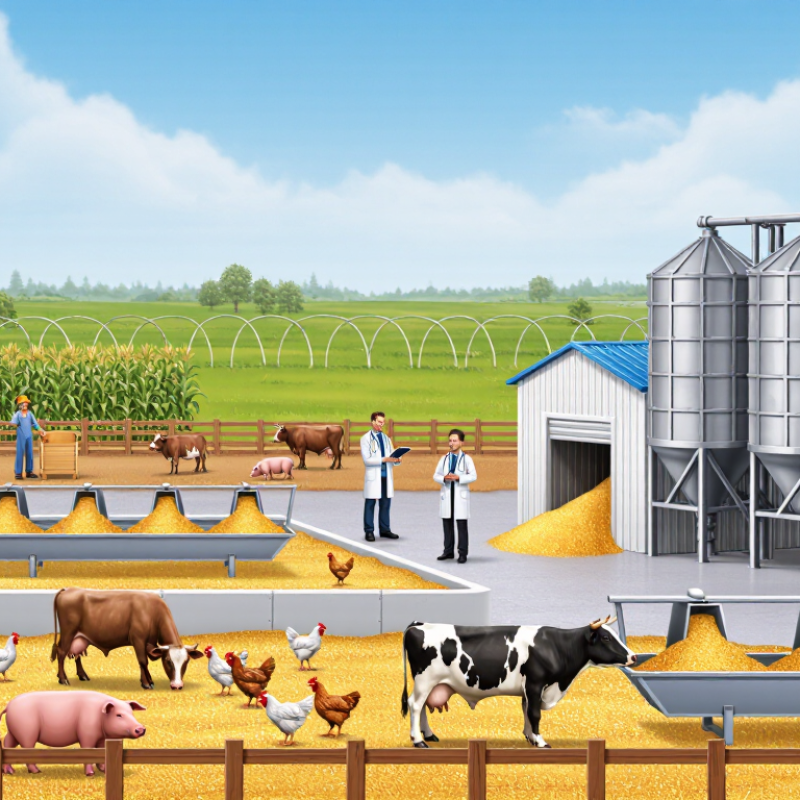
The animal nutrition industry covers the science, ingredients, and services used to meet animals’ dietary needs. It serves livestock, poultry, aquaculture, and companion animals. Its work begins with raw materials such as grains, oilseed meals, minerals, and vitamins. Nutritionists combine these ingredients into feeds suited to an animal’s species, age, health, and production stage. Small changes matter. A young calf and a laying hen need very different nutrient profiles.
The industry also includes premixes, specialized supplements, feed manufacturing, and quality testing. Some providers help farms interpret feed analyses or adjust rations when forage quality changes. A lab may check nutrient levels, while a mill measures ingredients and blends them into uniform batches. Good formulation depends on more than a recipe. Storage, mixing accuracy, water access, and daily intake can all affect results. Real conditions are messy, and nutrition plans do not always work exactly as expected.
Tips: Keep feed dry and check for unusual odors or clumping. Record intake and animal condition; those simple observations can help identify when a ration needs review.
As production systems seek better feed efficiency and more consistent animal health, demand for specialized nutrition can rise. The field therefore includes researchers, ingredient suppliers, mills, laboratories, veterinarians, and farm advisers. Their roles overlap, but each contributes a different piece of the feeding process.
Livestock and pet food demand is pushing animal nutrition into a larger role across agriculture and food production. As farms seek steady growth and reliable yields, feed must support animals through different life stages. A young calf, for example, needs a different nutrient balance from a mature dairy cow. This creates demand for carefully formulated feed, consistent ingredients, and practical guidance. Small changes matter.
Pet owners are also paying closer attention to what goes into daily meals. They increasingly look for food that supports digestion, healthy skin, and suitable energy levels. Meanwhile, manufacturers must manage ingredient quality and keep formulas consistent. That is not always simple. Ingredient prices can shift, and nutrition targets may differ by animal size, age, or activity. It is tempting to describe growth as automatic, but affordability and clear evidence still shape buying decisions.
Tips: Match feed plans to an animal’s age, condition, and purpose. Check ingredient specifications and nutrient analysis rather than relying on broad claims. For pets, observe appetite, stool quality, and body condition after a diet change, and consult a qualified veterinarian when concerns persist. A neat formula on paper may not fit every animal.
Animal nutrition is changing as researchers connect feed ingredients with measurable outcomes, not just growth rates. Better nutrient analysis can reveal whether a ration supports digestion, muscle development, or steady egg production. In a laboratory, small differences in fiber or amino acid availability can matter. Details matter.
Feed technology makes that knowledge more useful on farms. Near-infrared sensors can estimate moisture and protein in incoming grain within minutes, helping nutritionists adjust formulas before mixing. Precision milling and blending can improve consistency, while software tracks intake, weight gain, and feed conversion over time. Yet a clean dashboard is not the same as a healthy animal. Heat stress, water quality, and handling can change results.
Research is also expanding beyond calories and protein. Studies of gut microbes, enzymes, and functional ingredients may help animals use nutrients more efficiently. The evidence is promising, but effects vary by species, age, and farm conditions. One awkward truth: more data does not automatically mean better decisions. Teams still need careful observation, sound sampling, and transparent trials. A formula may look efficient on paper, then perform differently when feed absorbs moisture in storage. Progress depends on revising assumptions when farm results disagree.
| Growth Driver | Data Point | What It Means for Animal Nutrition | Source |
|---|---|---|---|
| Expanding feed production | Global commercial feed production was estimated at 1.29 billion metric tonnes in 2023, up 1.2% from 2022. | A large and growing feed base increases demand for balanced formulations, dependable ingredient supply, and nutrition solutions tailored to different species and production stages. | Alltech, 2024 Agri-Food Outlook |
| Long-term population growth | The United Nations estimated the world population at about 8.2 billion in 2024 and projects about 9.7 billion by 2050. | Population growth is a long-term food-system demand factor. It supports interest in efficient animal production and nutrition strategies that make effective use of feed resources. | United Nations, World Population Prospects 2024 |
| Aquaculture growth and feed needs | Global aquaculture produced 94.4 million tonnes of aquatic animals in 2022. | Aquaculture growth increases the importance of species-specific feed, digestible nutrients, and careful ingredient selection to support animal health and production. | FAO, The State of World Fisheries and Aquaculture 2024 |
| Pressure to reduce emissions | Livestock systems account for approximately 32% of human-caused methane emissions, according to the Global Methane Assessment. | This environmental challenge is encouraging research into feed strategies that can improve nutrient use and reduce emissions, while outcomes vary by animal, diet, and production system. | UNEP and Climate and Clean Air Coalition, Global Methane Assessment, 2021 |
| More precise feed formulation | Feed formulation can account for nutrient composition, digestibility, animal requirements, and ingredient variability; these are established areas of animal nutrition research. | Laboratory analysis, nutrition models, and production data can help nutritionists adjust diets more precisely, manage nutrient costs, and reduce avoidable nutrient losses. | FAO, Poultry Development Review: Feed and Nutrition |
Note: Figures refer to the years and definitions stated in the sources; commercial feed production is not the same as total feed consumed by all animals.
Why Is the Animal Nutrition Industry Set to Grow?
How Sustainability and Regulation Shape Industry Practices
Demand for animal nutrition is rising as producers seek better feed efficiency, healthier herds, and steadier output. Growth increasingly depends on sustainability and regulation, not just production volume. Small changes matter. At a feed mill, teams may track energy use, ingredient origins, water consumption, and nutrient losses. These records can reveal waste, though gathering reliable data across farms and suppliers is rarely straightforward.
Regulations differ by market, but requirements often encourage clearer ingredient traceability, accurate labeling, and evidence for environmental claims. Companies may need to document where raw materials come from and how formulas meet nutrient standards. That adds work. Smaller producers can face real costs when they update software, train staff, or arrange independent checks. A rule that looks simple on paper may be difficult to apply across varied farming conditions.
Sustainability also shapes product development. Nutrition specialists can adjust protein and mineral levels to help animals use nutrients more efficiently, while avoiding excess nutrients in manure. Yet no formula works equally well for every species, farm, or climate. I would not treat a lower-impact claim as proof of better practice without looking at its measurements and boundaries. Sometimes the data is incomplete, and that deserves a clear explanation. As buyers and regulators ask more detailed questions, practical recordkeeping and honest reporting are becoming part of everyday nutrition work.
Animal nutrition is changing as producers seek better results from each kilogram of feed. In poultry houses, for example, small adjustments to amino acid balance can influence growth and feed efficiency. Better knowledge of animals’ life stages is also encouraging more targeted diets, rather than one formula for every herd or flock. The details matter.
Digital tools are adding momentum. Sensors can track feed intake, weight, and barn conditions, helping nutrition teams spot changes sooner. These readings are useful, but they do not explain every problem; disease, weather, and management can affect the same measures. Data needs context. Otherwise, precision becomes guesswork.
Demand for companion-animal foods and interest in digestive health are supporting product development, while livestock producers face pressure to reduce waste and use resources efficiently. Research into new protein and fiber sources may broaden ingredient options, though cost, consistency, and digestibility remain practical hurdles. Sustainability claims also need clear evidence, not just attractive wording. Progress may be uneven. A promising ingredient can work well in trials and still prove difficult to source reliably at scale.
Global compound feed production, 2020–2023 (billion metric tons)
Global feed production rose from an estimated 1.187 billion metric tons in 2020 to 1.290 billion in 2023. Continued demand for animal protein, alongside greater attention to feed efficiency and animal health, may support further expansion in animal nutrition.
Source: Global annual compound-feed production estimates. Figures are rounded.
Researchers now connect feed ingredients with digestion, muscle development, and egg production. Small differences matter.
Near-infrared sensors can estimate moisture and protein in grain within minutes. Teams can adjust formulas before mixing.
No. Heat stress, water quality, and handling can affect results. Data needs context.
Research suggests they may help animals use nutrients more efficiently. Effects vary by species, age, and farm conditions.
Adjusting protein and mineral levels may improve nutrient use and reduce excess nutrients in manure. Results differ between farms.
Producers may need records on ingredient origins, labels, and nutrient standards. Smaller operations can face added software and training costs.
Targeted diets, digital monitoring, companion-animal food demand, and new protein sources may support growth. Reliable sourcing remains a hurdle.
No. Measurements may be incomplete, and claim boundaries matter. I would look for clear evidence, not attractive wording alone.
Storage moisture, weather, disease, and management can change results. Paper estimates are not the whole story.
The animal nutrition industry covers the development and supply of food and nutritional products for livestock and companion animals. Its growth is supported by rising demand for animal protein and increased attention to pet health, which encourage producers to seek diets that promote wellbeing, efficient growth, and consistent product quality. Advances in nutrition science and feed technology are also changing how diets are formulated, with greater use of research and data to match nutritional needs across different species and stages of life.
Sustainability and regulation shape how the industry sources ingredients, manages production, and maintains safety and quality standards. At the same time, changing consumer preferences, continued innovation, and demand for more resource-efficient farming may create new opportunities. Considering these forces together helps answer the question “what is the future of animal nutrition industry”: its direction will likely depend on balancing animal health, reliable production, environmental responsibility, and evolving market needs.

Lenavax Nutrition