Feeding a growing population requires higher productivity without exhausting soil, water, or biodiversity. FAO’s The Future of Food and Agriculture report projects that food demand could rise by about 50% by 2050. That pressure makes how to increase crop yield sustainably a practical question, not a marketing phrase.
Field experience shows that yield gains usually come from several modest improvements. Better soil testing can guide fertilizer rates. Drip irrigation can place water near active roots. Crop rotation can interrupt pest cycles and support soil structure. Improved seed varieties may strengthen drought tolerance, but they cannot replace suitable management. Small details matter. A blocked filter or poorly calibrated planter can reduce the value of expensive inputs.
Water efficiency deserves careful attention. FAO AQUASTAT reports that agriculture accounts for roughly 70% of global freshwater withdrawals. Yet irrigation benefits vary widely by crop, climate, and infrastructure. The OECD-FAO Agricultural Outlook 2024–2033 also emphasizes productivity growth, resilience, and resource efficiency across food systems. These reports support evidence-based planning, but they do not provide a universal recipe.
This guide examines ten practical approaches, including soil health, precision technology, integrated pest management, protected cultivation, and post-harvest control. Some recommendations require capital. Others need better timing and recordkeeping. Results should be measured through yield, input use, profit, and environmental indicators. Higher yield alone can hide depleted soil or rising production costs. Sustainable farming is not perfectly predictable. That uncertainty deserves honest monitoring, local trials, and periodic correction.
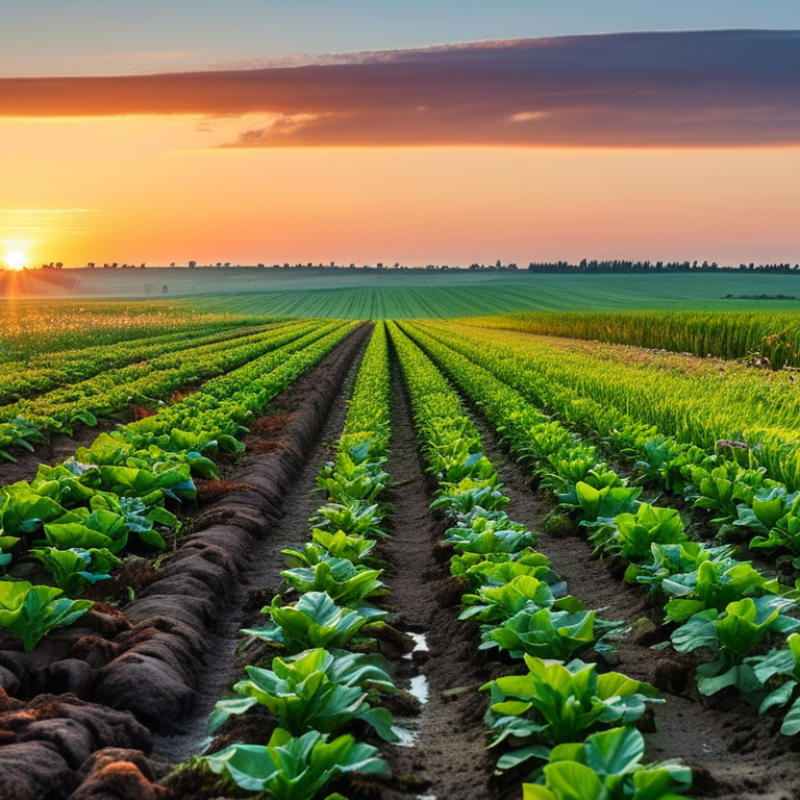
Healthy soil is the foundation of reliable crop yields. Yet, the FAO’s Status of the World’s Soil Resources reports that about 33% of global soils are moderately or highly degraded. Start with evidence. Test soil pH, organic matter, phosphorus, potassium, salinity, and compaction before applying inputs. A single sample can mislead, so collect several cores from each management zone.
Use field observations alongside laboratory results. Check whether water infiltrates after rain, roots penetrate deeply, and soil aggregates remain intact when gently squeezed. The USDA Natural Resources Conservation Service identifies reduced disturbance, soil cover, biodiversity, and living roots as key soil health principles. Cover crops, diverse rotations, and residue retention can protect the surface from heat and erosion. They also feed soil organisms.
Organic amendments may help, but more is not always better. Apply compost or manure only after testing nutrient content and salinity. Excess nutrients can damage roots and pollute waterways. Track changes annually, including infiltration time and organic matter. The Soil Health Institute’s farmer research has linked improved soil practices with better water management and, in many cases, stronger farm profitability. Results still vary by climate, crop, and soil type.
No soil plan is perfect. A poorly timed cover crop can compete for moisture. Review the data, notice failures, and adjust the next season’s practice.
Efficient irrigation is one of the most practical ways to increase crop yield sustainably. FAO AQUASTAT reports that agriculture uses about 70% of global freshwater withdrawals. Irrigated land produces roughly 40% of the world’s food, although it covers only about 20% of cultivated land, according to the FAO’s State of Food and Agriculture. These figures show irrigation’s value, but they also expose its pressure on rivers and aquifers.
Start with soil moisture measurements, not guesswork. Drip systems can deliver water near plant roots, reducing evaporation and runoff. Yet drip irrigation is not automatically efficient. Clogged emitters, poor pressure control, and excessive watering still waste water. I have seen dry crop rows beside saturated ones when maintenance was ignored. Scheduling should follow crop growth, soil type, rainfall, and daily weather data. The World Bank also highlights improved irrigation management as a key path toward agricultural water security.
Tips: Check emitters weekly and repair leaks immediately. Water early in the morning or near sunset. Add organic matter where suitable to improve soil moisture retention. Use mulching around plants, but keep stems uncovered. Keep simple field records. Compare irrigation time, rainfall, soil moisture, and harvest weight. Some recommendations will fail on your farm, and that matters. Test one plot before changing the whole field.
Application efficiency shows the percentage of diverted irrigation water that reaches the crop root zone. Higher efficiency can reduce water loss, support more consistent soil moisture, and improve crop productivity without expanding water withdrawals.
Typical engineering values based on irrigation-efficiency ranges reported in USDA NRCS irrigation guidance and FAO water-management resources.
Resilient crops can protect a farm when weather becomes unpredictable.
In field trials and farm visits, I have seen mixed plantings recover faster after heat, wind, or short droughts. Choose varieties suited to local soil, rainfall, and planting dates.
A hardy crop is not automatically profitable. Farmers should compare yield records, market demand, storage needs, and labor costs before changing acreage.
Keep a small test plot. It exposes weaknesses without risking the entire harvest.
Diversification works best when each enterprise supports another.
Legumes can add nitrogen and provide forage, while cereal residues protect soil from drying. Vegetables, grains, fruit trees, and carefully managed livestock can spread income across seasons.
Rotating crops also interrupts some pest cycles and reduces pressure on one nutrient supply.
Plan water use closely. A diverse farm can still fail if every crop needs water during the same dry month. Soil tests, local advisers, and weather records can improve these decisions.
I would not copy a neighboring farm without adjustment.
Its soil, equipment, and buyers may differ. Start with two or three complementary crops, then measure harvest weight, input costs, disease, and labor time.
Record disappointing results too. They often reveal hidden risks, such as late harvests competing for workers.
Resilient production is practical, but it is rarely perfect. Leave room to revise the plan after each season.
Top 10 Ways to Increase Crop Yield Sustainably: Use Integrated Pest Management and Natural Controls
Integrated Pest Management (IPM) protects crops while reducing unnecessary chemical use. It combines field scouting, prevention, biological controls, and carefully timed treatments. Walk the rows twice weekly, checking leaf undersides, stems, and nearby weeds. Record pest numbers, plant damage, weather, and crop growth. These simple notes help distinguish a real outbreak from minor feeding.
Natural controls begin with habitat. Flowering strips can provide nectar for hoverflies, lacewings, and parasitic wasps. Small ponds may support frogs and other insect predators. Choose locally suitable plants, and avoid treating every insect as harmful. Some pests can remain below the economic damage threshold without reducing harvest quality. Hand-picking caterpillars, using row covers, rotating crops, and removing infected plant debris can also slow pest growth. Resistant varieties often help, although they may not perform equally well in every soil.
Timing matters. Apply any permitted treatment only after monitoring shows a justified need, and protect pollinators during flowering. Natural substances are not automatically harmless. Even biological products can affect non-target organisms when used carelessly. Farmers should follow local agricultural guidance and label instructions. In my field observations, habitat strips improved predator activity, but they also sheltered some pests near crop edges. That result required closer scouting and wider border management. IPM is practical, but it is not effortless. Mistakes still happen. The useful response is to measure them, adjust the plan, and keep learning each season.
Precision farming can raise crop yields while reducing waste, but only when gains are measured carefully. Begin with a field baseline: record yield per hectare, irrigation volume, fertilizer use, soil texture, and pest pressure. Divide the field into management zones using soil tests and historical harvest maps. Measure the baseline.
Install soil-moisture sensors at different depths, then check readings against hand samples. Satellite or drone images can reveal stressed strips, uneven growth, and waterlogged corners. Use these observations to adjust irrigation and nutrients by zone, rather than treating every hectare alike. Keep an untreated comparison area when possible. It shows whether the new practice truly worked.
Sustainable yield gains need more than one successful harvest. Compare yield, input use, crop quality, and soil organic matter across at least two seasons. Record rainfall and unusual heat, because weather can distort the results. Sensors also fail. A disconnected device once created a false dry-zone alert in one field, reminding growers to verify data before changing irrigation schedules. Independent soil analysis and advice from a qualified agronomist can strengthen decisions. Calculate water productivity by dividing marketable yield by irrigation volume. Calculate fertilizer efficiency by comparing added yield with nutrient applied. Some gains may be too small to justify new equipment, especially on irregular fields. That is useful evidence, not failure. Crop yield must be measured beside soil health, operating costs, and long-term resilience.
| No. | Sustainable Practice | Precision-Farming Application | Indicative Yield Gain* | Key Resource Benefit | Recommended Measurement |
|---|---|---|---|---|---|
| 1 | Soil Testing and Nutrient Balancing | Create field fertility maps and apply nutrients according to soil-test results and crop demand. | 3–10% | Lower nutrient losses | Record yield per hectare, nutrient-use efficiency, and kilograms of nutrient applied per tonne harvested. |
| 2 | Variable-Rate Seeding and Fertilization | Use prescription maps, yield maps, and soil zones to vary seed and fertilizer rates within a field. | 0–8% | More efficient input use | Compare yield, input cost, and partial profit by management zone against a uniform-rate control area. |
| 3 | Scheduled and Sensor-Based Irrigation | Combine soil-moisture sensors, weather data, and crop evapotranspiration estimates to time irrigation. | 5–20% | 10–30% less irrigation water | Measure yield per cubic metre of irrigation water, total water applied, and crop stress days. |
| 4 | Cover Crops and Soil Organic Matter Management | Use soil maps and field monitoring to select cover-crop mixtures and track soil-moisture and organic-carbon changes. | 0–8% initially; often higher over time | Improved infiltration and erosion control | Track soil organic carbon, infiltration rate, erosion indicators, soil moisture, and yield over at least three seasons. |
| 5 | Conservation Tillage and Residue Retention | Use field traffic maps and soil-compaction tests to limit unnecessary passes and protect soil structure. | 0–10% | Lower fuel use and soil erosion | Measure fuel use per hectare, soil bulk density, runoff or erosion, soil moisture, and harvested yield. |
| 6 | Crop Rotation and Legume Integration | Analyze multi-year yield maps and soil-nitrogen data to optimize crop sequences and nitrogen credits. | 5–15% | Reduced pest pressure and synthetic nitrogen demand | Compare yield stability, soil nitrate, disease incidence, fertilizer use, and gross margin across rotations. |
| 7 | Integrated Pest Management | Use scouting records, field sensors, weather models, and mapped pest thresholds to target treatments only where needed. | 2–10% | Reduced pesticide applications | Record pest incidence, treated area, active ingredient per hectare, crop damage, and marketable yield. |
| 8 | Locally Adapted and Stress-Tolerant Varieties | Use multi-location trial data and field-zone performance records to match varieties with soil, climate, and disease risks. | 5–20% | Greater climate resilience | Compare adjusted yield, maturity date, lodging, disease severity, quality grade, and yield variability. |
| 9 | Optimized Planting Density and Timing | Use historical yield maps, soil productivity zones, and planting-date records to refine population and planting windows. | 2–8% | Better use of seed and growing-season moisture | Measure emergence rate, final plant population, yield per plant, harvest moisture, and yield per hectare. |
| 10 | Remote Sensing and Zone-Based Crop Scouting | Use satellite or aerial imagery to identify variability, then verify problems with targeted field sampling. | 2–8% | Earlier detection and fewer blanket treatments | Track scouting response time, affected area, corrective-action cost, yield by zone, and avoided input applications. |
*Note: Yield-gain ranges are indicative values reported across different crops, soils, climates, and management systems; actual results vary. Sustainable yield gains should be evaluated against a comparable baseline over multiple seasons, while also tracking water use, nutrient-use efficiency, soil health, pesticide use, fuel consumption, and profit per hectare.
: Soil tests reveal pH, organic matter, nutrients, salinity, and compaction. One sample can mislead. Collect several cores from each management zone.
Healthy soil absorbs rain, supports deep roots, and holds together when gently squeezed. Check fields after rainfall. Slow infiltration may signal compaction or poor structure.
Use reduced disturbance, soil cover, diverse rotations, and living roots. Cover crops protect soil from heat and erosion. They also provide food for soil organisms.
No. Test nutrient content and salinity before application. Excess nutrients can injure roots and pollute waterways. More material is not automatically better.
Record yield per hectare, irrigation volume, fertilizer use, soil texture, and pest pressure. This creates a field baseline. Without one, improvement becomes difficult to prove.
Divide fields using soil tests and historical harvest maps. Adjust irrigation and nutrients by zone. Do not treat every hectare alike.
Keep an untreated comparison area when possible. Compare yield, crop quality, input use, and soil organic matter across two seasons. One good harvest is weak evidence.
Sensors can fail or send false dry-zone alerts. Verify readings with hand samples and field observations. Technology helps, but it is not infallible.
Calculate water productivity by dividing marketable yield by irrigation volume. Compare extra yield with nutrients applied to estimate fertilizer efficiency. Small gains may not justify expensive equipment.
Review rainfall, heat, costs, soil changes, and crop results. A cover crop may compete for moisture. Failure can still provide useful evidence.
Learning how to increase crop yield sustainably begins with strengthening the foundation of the farm: healthy soil. Regular soil testing, compost, cover crops, crop rotation, and reduced disturbance can improve fertility, structure, and biological activity over time. Water management is equally important, so farmers should match irrigation to crop needs, reduce evaporation, repair leaks, and use soil moisture observations to avoid unnecessary watering. Selecting resilient crop varieties and diversifying production can improve farm stability, protect against weather changes, and support healthier growing systems.
Sustainable yield improvement also depends on preventing problems before they become severe. Integrated pest management combines field monitoring, beneficial organisms, physical barriers, and carefully timed controls to reduce crop damage while protecting the wider ecosystem. Finally, precision farming tools and consistent recordkeeping can help farmers measure inputs, identify weak areas, and compare results across seasons. By combining these practices, growers can increase productivity responsibly while preserving soil, water, biodiversity, and long-term farm resilience.

Lenavax Nutrition