Animal growth is visible in small changes: a heavier calf, stronger bones, or faster feather development. But what drives those changes? A useful question is “how does nutrition affect animal growth,” and the answer reaches beyond simply providing more feed. Nutrient balance, intake, digestibility, and access to clean water all shape how efficiently animals develop.
The scale of feeding makes this a practical concern. Alltech’s 2024 Agri-Food Outlook estimated global animal-feed production at about 1.29 billion metric tons in 2023, based on data from 142 countries. That estimate describes a vast industry, not the diet of every individual animal. The National Academies’ Nutrient Requirements of Beef Cattle, Eighth Revised Edition, explains that requirements vary with factors such as body weight, age, and production stage. A growing calf and a mature cow do not need identical rations. Details matter.
This article explores ten ways nutrition can influence growth, including energy supply, protein quality, minerals, vitamins, and feeding consistency. It also considers feed conversion and health, because poor growth may reflect disease, stress, housing, or management—not diet alone. That distinction is easy to miss. Nutritional targets are useful guides, but real animals can respond differently, and farm conditions vary. The evidence supports careful measurement, sound professional advice, and adjustments based on observed performance rather than assumptions.
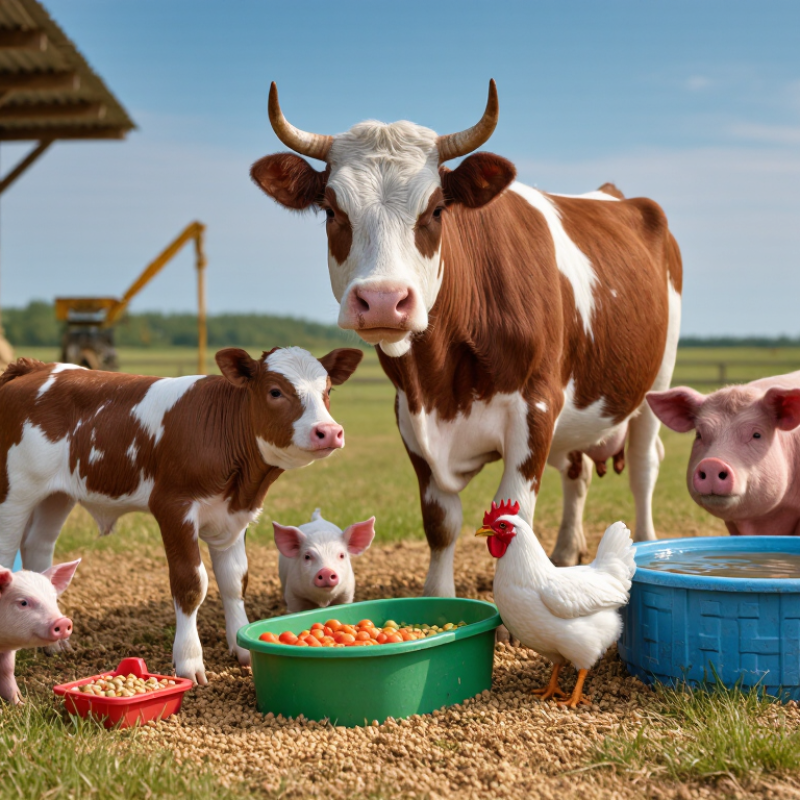
Animal growth changes the job of a ration. Young animals build muscle and bone quickly, while later growth often needs less protein per unit of feed. Small bodies, fast change.
The National Research Council’s Nutrient Requirements of Poultry (1994) lists 23% crude protein for broiler starter diets, 20% for grower diets, and 18% for finisher diets. These are reference values, not a recipe for every flock.
In swine, the NRC’s Nutrient Requirements of Swine (2012) estimates standardized ileal digestible lysine at 1.26% of the diet for 11–25 kg pigs, compared with 0.83% for 75–100 kg pigs. The falling percentage reflects changing growth demands, not a signal to neglect amino-acid balance.
Feed intake, temperature, health, and genetics can shift actual needs. A pig eating less during a cold spell may miss its daily nutrient target even when the feed formula looks right. Yet a tidy table can mislead. Weigh animals regularly, check feed refusals, and adjust with a qualified animal nutritionist using current, species-specific guidance.
Growth needs fuel. When an animal eats too little usable energy, more of that energy goes toward basic maintenance, leaving less for tissue gain. The National Academies’ Nutrient Requirements of Beef Cattle (2016) estimates maintenance energy using metabolic body weight, calculated as live weight raised to the 0.75 power. By that relationship, doubling body weight raises the maintenance term by about 68 percent. That is a useful planning figure, not a prediction of an individual animal’s growth rate.
Daily energy intake depends on both feed consumed and its energy density. A full trough does not guarantee adequate intake if the ration is diluted, spoiled, or difficult to digest. Nor does simply adding energy ensure faster, healthy growth. The National Research Council’s Nutrient Requirements of Swine (2012) accounts for energy alongside amino acids and other nutrients; growth can stall when these needs are out of balance. Small details matter. Weighing feed offered and refused, then tracking weight gain under consistent conditions, helps reveal whether animals are actually getting enough.
Heat stress can reduce feed intake, while cold conditions may increase maintenance demands. A practical ration can still miss the mark. I’d treat published requirements as a starting point and review them against the animals’ age, housing, health, and measured performance.
Daily resting energy requirement rises with body weight. Growing animals need energy above maintenance to support tissue growth.
Estimates use the standard canine resting energy requirement equation: 70 × body weight (kg)0.75. This is a maintenance baseline, not a growth-feeding recommendation; actual needs vary with age, breed, activity, and health.
Protein is more than fuel for a growing animal. Its amino acids help build muscle, skin, connective tissue, and enzymes. Essential amino acids must come from food because the body cannot make enough of them. If one is lacking, tissue development may slow even when the feed bowl looks full. Growth is not linear. Young animals can gain weight quickly, then slow as their needs change.
Protein needs depend on species, age, health, and the energy in the entire diet. A puppy, calf, and chick do not share identical requirements. Protein quality matters too: digestibility and amino acid balance affect how much the animal can use. More protein is not automatically better; excess nitrogen must be excreted, and an unbalanced diet can displace other nutrients. A shiny coat is encouraging, but it cannot tell the whole story. It is easy to overread one week’s change on the scale, so look for patterns over time.
Tips: Weigh animals consistently and note appetite, body condition, and growth. If progress remains poor, ask a veterinarian or qualified animal nutrition professional to review the full ration.
| No. | Nutritional factor | How it affects tissue development | Practical consideration |
|---|---|---|---|
| 1 | Adequate total protein | Provides amino acids needed to build muscle and other body proteins. A shortage can limit growth even when energy intake is sufficient. | Match dietary protein supply to species, body size, production stage, and the rest of the ration. |
| 2 | Essential amino acid balance | Animals cannot make enough of certain essential amino acids, so these must come from feed. An imbalance can constrain protein synthesis and tissue growth. | Assess amino acid supply as well as crude protein; requirements differ among species and diets. |
| 3 | Limiting amino acids, such as lysine | The essential amino acid in shortest supply relative to need can limit the animal’s use of other amino acids for new body protein. Lysine is often a key limiting amino acid in grain-based pig and poultry diets. | Identify limiting amino acids for the specific species and ration rather than assuming one amino acid is limiting in every diet. |
| 4 | Protein and amino acid digestibility | Only the portion digested and absorbed is available for metabolism and tissue construction. Poorly digestible protein can reduce the usable supply. | Consider ingredient quality, processing, and species-specific digestibility when formulating diets. |
| 5 | Energy–protein balance | Energy supports maintenance and growth, while amino acids supply building blocks. Too little energy can cause amino acids to be used for energy rather than tissue protein. | Balance dietary energy and usable amino acids; the appropriate ratio depends on animal type and growth stage. |
| 6 | Age and growth stage | Young, rapidly growing animals generally have different protein and amino acid needs from mature animals, whose nutrient use is more focused on maintenance or production. | Use life-stage-appropriate feeding guidance and adjust as animals grow or their production status changes. |
| 7 | Muscle protein deposition | Adequate, well-balanced amino acid intake supports the synthesis of muscle proteins and can help growing animals develop lean tissue. | Growth also depends on genetics, health, activity, and energy intake; protein alone does not determine muscle gain. |
| 8 | Connective tissue and structural proteins | Amino acids are also used to make proteins such as collagen, which is present in connective tissues including tendons, ligaments, and skin. | Support overall nutrient adequacy; normal tissue development involves more than muscle protein alone. |
| 9 | Feed intake and palatability | An animal must consume enough feed to obtain the protein and amino acids required for growth. Low intake can reduce nutrient supply even if the diet is well formulated. | Monitor intake, water access, feed freshness, and health, especially during weaning or other periods of stress. |
| 10 | Excess protein and amino acid imbalance | Protein supplied beyond the animal’s usable needs does not automatically produce faster growth. Surplus amino acids are metabolized, and their nitrogen is excreted. | Aim for a balanced ration rather than simply increasing crude protein; seek qualified nutrition advice for precise requirements. |
Growth depends on more than calories. Vitamins support processes such as vision, bone development, and immune function, while minerals help build skeletons and muscle. A young calf’s uneven appetite can make daily nutrient intake inconsistent. Small gaps may matter over time. Yet adding supplements without checking the whole ration can also upset nutrient balance.
Water deserves equal attention. The National Research Council’s Nutrient Requirements of Dairy Cattle (2001) reports that cattle may consume roughly 3.5–5.5 kilograms of water per kilogram of dry matter eaten. Heat, body size, and milk production shift that range, so it is not a universal target.
Clean, reachable troughs help animals drink; a slow refill or warm, dirty water can quietly reduce intake. NRC nutrient tables also set vitamin and mineral needs by species and growth stage, rather than offering one formula for every animal. That detail is easy to overlook. Feed analysis, reliable water access, and regular checks of growth and body condition provide a sounder basis for adjustments than guesswork.
Feed Quality, Digestibility, and Nutrient Absorption
Growth depends not only on what a ration contains, but on what an animal can digest and absorb. In a feed bunk, dusty, uneven particles may be refused or sorted, while properly processed ingredients can support steadier intake. For ruminants, forage maturity and fiber quality influence rumen fermentation; for poultry and pigs, particle size and ingredient digestibility affect how efficiently nutrients are used. Small losses add up.
The 2024 Global Feed Survey estimated worldwide feed production at 1.29 billion metric tonnes in 2023. That scale makes ingredient consistency and quality checks important, though tonnage alone says nothing about nutritional value. The National Academies’ 2021 Nutrient Requirements of Dairy Cattle report models requirements around factors such as body weight, milk production, and feed intake. The practical point is clear: a ration that works for one animal or life stage may not fit another.
On farm, watch feed refusals, manure consistency, body condition, and growth records alongside the feed label. These clues can reveal poor digestibility or uneven intake before the ration looks obviously wrong. Still, measurements have limits. A spreadsheet can miss what happens when heat, water access, or sudden feed changes reduce consumption. Nutrient absorption is not a fixed number; it shifts with the animal and its conditions.
Animals use energy for basic maintenance before tissue gain. Less usable energy leaves less for growth. Not always obvious.
No. A common estimate suggests maintenance needs rise by about 68 percent when body weight doubles. This is a planning figure, not a growth forecast.
Not necessarily. Feed may be diluted, spoiled, or difficult to digest. Weighing feed offered and refused can reveal what animals actually eat.
No. Energy must be balanced with amino acids and other nutrients. An imbalance can limit growth, even when feed intake seems high.
Heat may reduce eating, while cold can raise maintenance demands. Check intake and growth during weather changes. I might overlook this myself.
They support functions such as bone development, muscle building, and immunity. Unchecked supplements can disturb the ration’s balance.
Cattle may consume roughly 3.5–5.5 kilograms of water per kilogram of dry matter eaten. Heat, body size, and milk production change this range.
Track feed offered, leftovers, weight gain, and body condition under consistent conditions. Keep troughs clean and easy to reach. Small details count.
Nutrition shapes animal growth from the earliest stages of life through maturity. Nutrient needs change as animals develop, so a balanced diet should provide suitable energy, protein, amino acids, vitamins, minerals, and clean water at each stage. Energy supports essential body functions and activity, while an appropriate energy supply helps animals grow at a steady, healthy rate. Too little may slow development, whereas an imbalance can affect body condition and efficient growth.
Protein and amino acids help build muscles and other tissues. Vitamins and minerals support normal development and body processes, and water is vital for digestion and nutrient transport. Feed quality also matters: digestible, well-balanced ingredients allow animals to absorb and use nutrients more effectively. In short, how does nutrition affect animal growth? It influences the pace and quality of development by determining whether animals receive and can use the nutrients their bodies need.

Lenavax Nutrition