Healthy farm animals depend on more than a full trough or a large pasture. Their bodies need balanced nutrients for growth, movement, reproduction, immunity, and milk or egg production. A young calf, laying hen, and mature sheep may share a farm, but their daily requirements are not identical.
So, what nutrients do farm animals need daily? This guide examines ten essential nutrient groups, including water, energy, protein, amino acids, fats, fiber, vitamins, and minerals. It also considers practical feed sources, such as hay, grains, oilseeds, mineral mixes, and clean drinking water. A handful of hay may look adequate, yet its value can change with maturity, storage, soil conditions, and moisture. Small differences matter.
Good nutrition is based on animal species, age, weight, production stage, health, and local feed analysis. Veterinary professionals, animal nutritionists, and agricultural extension services can help verify a ration before major changes are made. Visible signs also offer useful clues: a dull coat, slow growth, weak shells, loose manure, or reduced appetite may indicate an imbalance. They do not prove one specific deficiency.
A neat list can mislead. No single feed supplies everything perfectly. Even experienced farmers sometimes adjust rations after testing forage or observing seasonal changes. This article provides a reliable starting point, not a substitute for professional advice. The goal is simple: help farmers recognize what each nutrient does and make safer, more informed feeding decisions every day.
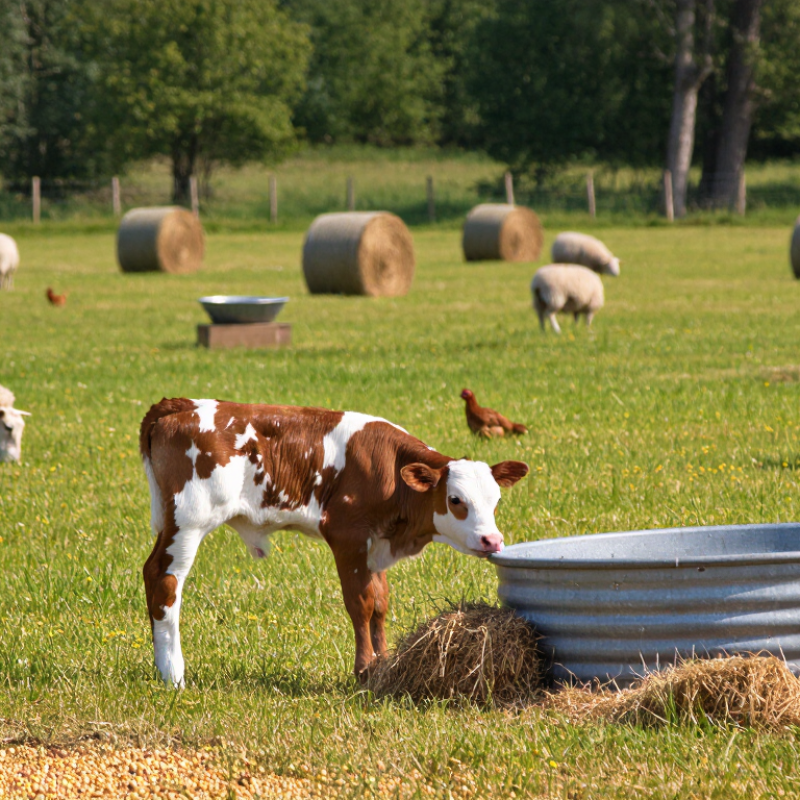
What Daily Nutrients Do Farm Animals Need for Healthy Growth?
Top 10 Nutrients Farm Animals Need Daily?
Healthy growth begins with more than protein. Farm animals need clean water, energy, protein, fiber, calcium, phosphorus, sodium, trace minerals, and vitamins A, D, and E. Water is often overlooked. The National Academies reports that a lactating dairy cow may require roughly 70–120 liters daily, depending on temperature, feed, and milk production. Growing pigs and poultry need less water, but restricted access quickly reduces feed intake and growth.
Energy supports movement, body heat, and tissue formation. Protein supplies amino acids for muscle, skin, feathers, and enzymes. Fiber keeps the rumen working in cattle, sheep, and goats.
Calcium and phosphorus build strong bones, but their balance matters more than either mineral alone. Sodium supports fluid regulation. Iron, zinc, copper, selenium, and iodine are needed in smaller amounts, yet deficiencies can become visible through poor coats, weak legs, or slow gains.
Vitamin A supports vision and immunity. Vitamin D helps animals use calcium. Vitamin E works with selenium in antioxidant protection. NRC and NASEM nutrient requirement reports stress that needs change with species, age, body weight, pregnancy, climate, and production.
A ration can look perfect on paper and still fail in a dusty pen. Feed testing, fresh water checks, and body-condition monitoring remain essential. I would not trust one fixed formula for every season. Farmer observations matter, but they should be checked against laboratory analysis and qualified veterinary or nutrition advice.
How Energy, Protein, and Amino Acids Support Animal Development
Top 10 Nutrients Farm Animals Need Daily?
How Energy, Protein, and Amino Acids Support Animal Development
Healthy animal development starts with usable energy. Carbohydrates and fats fuel movement, body temperature, digestion, and growth. If energy intake falls short, animals may use protein for fuel instead of building muscle. This weakens development. Excess energy can also create problems, including unwanted fat and reduced productivity. Daily needs vary with species, age, weight, weather, and production stage.
Protein supplies the building material for muscle, skin, enzymes, hormones, and immune defenses. However, total protein alone does not guarantee a balanced ration. Animals need essential amino acids, such as lysine and methionine, in suitable proportions. Young pigs, poultry, calves, and growing sheep may respond differently to the same feed. In practical nutrition reviews, I have noticed that water intake and feed quality are sometimes underestimated. That is a mistake. Spoiled ingredients can reduce intake and create health risks. Laboratory testing and advice from a qualified animal nutritionist improve feeding decisions.
Tips: Check body condition, growth records, manure consistency, and daily feed intake. Adjust rations gradually, not overnight. Provide clean water at all times. Read nutrient analyses carefully, because two feeds with similar protein levels may supply very different amino acid profiles. No feeding plan is perfect. Recheck it when seasons, housing, or animal performance changes.
Why Vitamins and Minerals Are Essential for Body Functions
Top 10 Nutrients Farm Animals Need Daily
Vitamins and minerals keep farm animals functioning beyond simple growth. Calcium and phosphorus build strong bones, teeth, and eggshells. Magnesium supports muscles, nerves, and enzyme activity. Sodium, potassium, and chloride regulate fluids and nerve signals. Sulfur helps form proteins, hair, wool, and essential body compounds. These nutrients work together, not separately. An imbalance can reduce appetite, fertility, movement, or milk production.
Vitamin A protects eyesight, skin, immunity, and reproductive health. Vitamin D helps animals absorb calcium and phosphorus, especially when sunlight is limited. Vitamin E protects cells and supports muscles and immune defenses. A calf with weak legs may need more than calcium alone. Its vitamin D status, phosphorus intake, and overall ration also deserve attention. One missing link can disturb the whole system.
Good feeding decisions begin with forage testing, clean water, and accurate animal records. A qualified veterinarian or livestock nutritionist can match diets to species, age, pregnancy, and production level. More is not always better. Excess minerals may interfere with absorption or burden the body. I have noticed that practical feeding plans are rarely perfect; pasture quality changes after rain, storage losses occur, and animals eat unevenly. That uncertainty deserves regular checking, not guesswork.
How Water, Fiber, and Fats Improve Digestion and Productivity
Top 10 Nutrients Farm Animals Need Daily?
Water, fiber, and fats quietly control much of an animal’s daily performance. The ten essential nutrient groups include water, carbohydrates, fiber, protein, amino acids, fats, calcium, phosphorus, sodium, and vitamins.
Water remains the most urgent. NASEM reports that lactating dairy cows may consume more than 100 liters daily in hot conditions. Clean troughs, steady flow, and fresh water support feed intake and milk production. A warm, dirty trough can change behavior quickly.
Fiber gives rumen microbes the structure they need. Effective fiber encourages chewing and saliva production, helping stabilize rumen pH. NASEM’s Dairy Cattle report identifies neutral detergent fiber as a key factor in intake and digestion. However, too much poorly digestible fiber can fill the rumen and reduce energy intake. The balance is easy to disturb. A practical check is visible cud chewing after feeding.
Dietary fats provide concentrated energy. They contain about 2.25 times more energy than carbohydrates, according to NASEM. Moderate fat inclusion can support milk yield, weight gain, and reproductive energy reserves. Excess fat may depress fiber digestion, especially when unsaturated fats are poorly managed. Beef cattle guidance from NASEM also stresses matching energy supply with growth demands. A ration can look excellent on paper, yet animals may sort it or leave dusty refusals. Regular feed testing, manure observation, and body-condition scoring remain imperfect but useful evidence.
How Nutrient Needs Vary by Species, Age, and Production Stage
Top 10 Nutrients Farm Animals Need Daily?
Nutrient needs change with species, age, body size, and production stage. Water remains the most important nutrient for every animal. Energy supports movement, body heat, growth, pregnancy, and milk or egg production. Protein supplies amino acids for muscle, feathers, wool, enzymes, and repair. Fiber supports rumen function in cattle, sheep, and goats, but pigs and poultry need less. Calcium and phosphorus build bones, eggshells, and milk. Sodium and chloride help maintain fluid balance and nerve function. Vitamins A, D, and E support vision, immunity, reproduction, and antioxidant protection. Trace minerals, including copper, zinc, selenium, and iodine, are needed in tiny amounts. Tiny does not mean unimportant.
Young animals often need more protein and minerals per kilogram than mature animals. Growing broilers require nutrient-dense feed, while laying hens need extra calcium for strong shells. Lactating cows may need far more energy, protein, water, and minerals than dry cows. Pregnant animals also need careful adjustment, especially during late gestation. Horses depend heavily on forage and require steady fiber intake. A feeding plan that suits goats may fail in pigs. I have seen diets look balanced on paper but miss actual forage quality. Feed analysis and body-condition checks can reveal that mistake.
Tips: Offer clean water continuously and monitor intake during hot weather. Match feed to the animal’s current stage, not its age alone. Weigh feed when possible. Store it dry and inspect for mold. Ask a veterinarian or qualified animal nutritionist before changing mineral levels, especially with selenium or copper. Recheck the plan after growth, calving, lambing, laying, or illness.
FAQS
Energy fuels movement, body heat, digestion, growth, pregnancy, and production. Too little energy may make animals burn protein for fuel. Too much can increase unwanted fat. Needs change with weather, age, weight, and production stage.
No. Animals also need suitable amino acids, including lysine and methionine. Two feeds may show similar protein levels but support different growth. Protein quality matters.
Water supports digestion, temperature control, nutrient movement, and waste removal. Intake often rises during hot weather. Monitor water access and unusual drops in drinking. This simple check is sometimes overlooked.
Calcium and phosphorus support bones, teeth, eggshells, and milk production. Magnesium supports muscles, nerves, and enzymes. Vitamins A, D, and E support vision, immunity, reproduction, and cell protection.
Not always. Calcium matters, but vitamin D, phosphorus, and the whole ration matter too. One missing link can disturb the system. More calcium alone may not fix the problem.
Cattle, sheep, goats, pigs, poultry, and horses use nutrients differently. Ruminants need effective fiber for rumen function. Poultry may need dense feed. A ration for goats may fail in pigs.
Yes. Young animals often need more protein and minerals per kilogram. Laying hens need extra calcium. Lactating cows may need more energy, water, protein, and minerals than dry cows.
Check body condition, growth records, manure consistency, feed intake, and water intake. Test forage when possible. Store feed dry and inspect it for mold. Recheck after illness, weather changes, or production changes.
Usually, no. Adjust rations gradually. Sudden changes may upset digestion or reduce intake. Monitor animals closely. No feeding plan is perfect, honestly. Review it when conditions change.
Conclusion
Understanding what nutrients do farm animals need daily is essential for healthy growth, strong immunity, and consistent productivity. Their diets should provide enough energy from carbohydrates and fats, along with high-quality protein and essential amino acids to support muscle, tissue, and organ development. Vitamins and minerals also play important roles in bone strength, blood formation, reproduction, nerve function, and disease resistance. Clean, fresh water is equally important because it supports digestion, temperature regulation, nutrient transport, and milk or egg production.
Fiber helps maintain healthy digestion and encourages normal activity in the digestive system, while suitable dietary fats provide concentrated energy and support overall body condition. However, nutrient requirements are not the same for every animal. Cattle, sheep, goats, pigs, and poultry have different digestive systems and feeding needs. Age, body size, growth rate, pregnancy, lactation, work, and production goals must all be considered when creating a balanced daily feeding plan.

 Lenavax Nutrition