A healthy meal begins long before it reaches a plate. The crops farmers choose, the soil they protect, and the water they use all shape what food is available. In turn, eating patterns influence which foods markets reward. So, how does sustainable nutrition impact agriculture? It can encourage demand for diverse, nutrient-rich crops, support more careful resource use, and reduce pressure to produce large volumes of a narrow range of foods. The connection is real, but rarely simple.
A field of beans beside rows of vegetables offers one visible example: crop diversity can broaden food choices and help farmers manage changing conditions. Seasonal produce may also reduce storage and transport needs, although results depend on local systems. There is no universal menu. Climate, soil, culture, and household income matter. Important details.
These seven tips explore practical links between food choices and farm decisions, from valuing plant variety to reducing food waste. They also consider responsible sourcing and the limits of consumer choice. A label alone cannot prove that a farming method is sustainable, and small farms do not automatically use fewer resources. That deserves reflection. Reliable decisions need context, transparent information, and attention to both nutrition and environmental trade-offs. Sustainable nutrition is not a perfect formula; it is a direction that farmers, food businesses, and consumers can keep improving together.
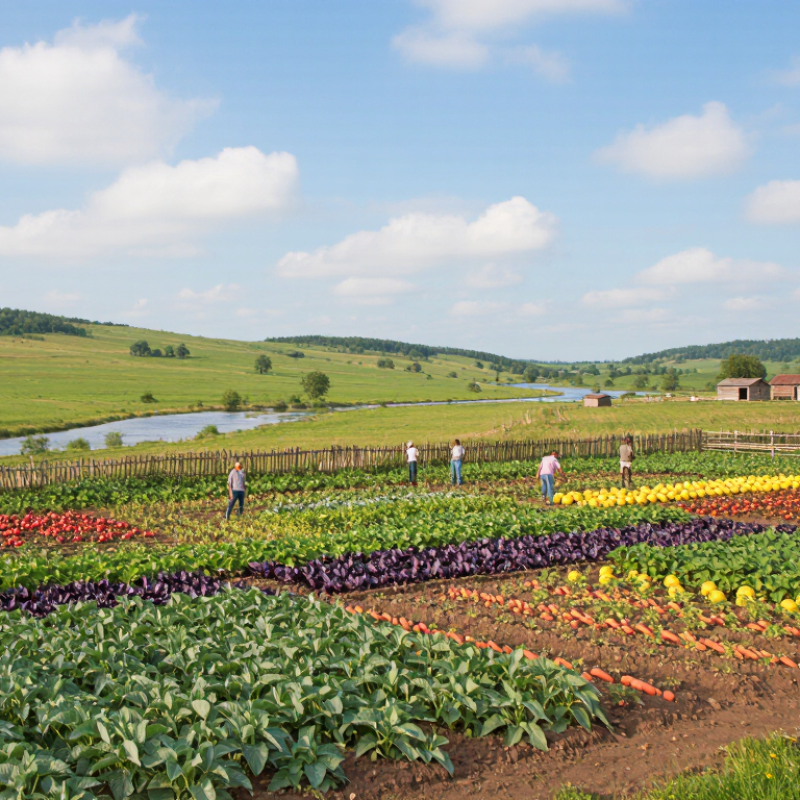
Sustainable nutrition connects what people eat with how food is grown, processed, and distributed. FAO and WHO’s 2019 Guiding Principles for Sustainable Healthy Diets describe diets that support health while reducing environmental pressure. They should also be affordable, safe, and culturally acceptable. In practice, that could mean a varied plate of beans, seasonal vegetables, and grains grown with care for local soil and water. It is not a one-size-fits-all menu. That matters.
Farming shapes whether such foods are available. FAO’s AQUASTAT database reports that agriculture accounts for about 70% of global freshwater withdrawals, making irrigation choices consequential. The IPCC’s 2019 Climate Change and Land report estimates that food systems generate 21–37% of human-caused greenhouse gas emissions. These figures cover broad systems, not every farm, and estimates depend on boundaries and methods. Still, they show why crop diversity, soil health, and efficient water use belong in nutrition discussions. A diet’s footprint is not determined by shoppers alone; farmers also face weather, prices, and limited infrastructure. I find the term “sustainable” a little slippery unless those constraints are named. A nutritious crop that cannot reach nearby markets helps few people.
Food choices send production signals far beyond the dinner plate. More demand for beans, peas, vegetables, and varied grains can make crop rotations more practical. Rotations help farmers interrupt pest cycles and keep soil covered. Yet switching crops is not instant; local markets, weather, and farm equipment all matter. Small shifts matter.
Water use is another pressure point. FAO’s 2021 State of the World’s Land and Water Resources for Food and Agriculture reports that agriculture accounts for 72% of global surface and groundwater withdrawals. Choosing foods that need less irrigation in a particular region can ease pressure, though growing conditions vary widely. Livestock choices shape feed production, too. FAO’s 2023 Pathways towards Lower Emissions report estimates livestock agrifood systems produced about 12% of human-caused greenhouse gas emissions in 2015. Lower demand for resource-intensive animal products may reduce feed-crop pressure, while responsibly managed livestock can still support livelihoods and use land unsuitable for crops. The trade-off is not tidy. Nutrition advice also needs to fit local diets and farmer incomes, not just global averages.
What people eat affects the land used to grow their food. Diets with more plant foods can reduce pressure on some resource-intensive crops and livestock systems, though impacts vary by region and farming method. A nearby field tells part of the story: bare soil after harvest may wash away during heavy rain, while cover crops help hold it in place.
Soil needs more than nutrients added at planting. Crop rotation, compost, and reduced soil disturbance can support structure and beneficial organisms, but these methods require suitable conditions and careful management. Water matters, too. Choosing crops suited to local rainfall can ease irrigation demand; drip systems may help, though installation and upkeep are not simple for every farm. No single practice fixes everything.
Biodiversity often depends on small details: flowering strips beside fields, hedges used by birds, or fewer pesticide applications when pest controls allow. Diverse crop rotations can also provide varied habitats and interrupt some pest cycles. Yet sustainable diets do not automatically create diverse farms; demand, prices, and local climate shape what growers can plant. It is worth asking where food comes from, while admitting that labels and quick rules rarely capture the whole picture.
Farmers can adapt production to nutritional needs by growing a wider mix of foods, not only crops with the highest market demand. A field plan might include beans for protein, leafy vegetables for folate, and grains suited to local diets. Crop choices depend on soil, water, climate, and what nearby communities can actually buy. Nutrition goals matter, but they cannot replace sound agronomy.
Tip: Rotate legumes with cereal crops. Add locally valued vegetables where water allows. Track harvests, soil conditions, and which foods sell. Small changes can reveal what works.
Diversified production can improve access to varied foods and may support healthier soils through crop rotation. Results are not automatic. A vegetable may spoil before reaching a village, or a new crop may fail during a dry season. Farmers can work with local nutrition advisers, extension specialists, and buyers to match planting schedules with demand and storage capacity. They should also compare yields and costs across seasons, rather than assume a “healthier” crop will be profitable. One imperfect harvest is useful evidence, though it is not a verdict. The practical aim is a resilient farm that supplies nourishing foods while respecting local conditions and farmers’ livelihoods.
Assessing progress toward sustainable nutrition means looking beyond harvest totals. A field can produce more grain while losing soil carbon or relying heavily on irrigation. Useful measures include crop diversity, soil organic matter, water use per unit of food, and nearby access to iron-rich or vitamin-rich foods. No single metric tells the whole story. That is the hard part.
Tip: Compare farms across several seasons, not just one favorable harvest. Track input use and soil cover alongside yields. Ask whether local households can access diverse foods, not merely whether those foods are grown. A small plot with beans, leafy greens, and fruit trees may support diets and pollinators, though it may not match a grain farm’s output per hectare. Measure that trade-off openly.
Progress also depends on who bears the cost. Farmers need workable incomes, while communities need affordable, nutritious food and resilient land. Record farmers’ experiences with drought, pests, labor, and market access; these details can explain why a promising practice stalls. Data are often incomplete, especially for small farms. Acknowledge that uncertainty and improve the measurement rather than presenting early gains as proof of lasting change.
| Tip | Progress indicator | Documented global data | What it means for agriculture and nutrition | Practical direction | Source |
|---|---|---|---|---|---|
| 1. Make lower-emission diets easier to produce and access. | Food-system greenhouse-gas emissions | Food systems generated about 34% of human-caused greenhouse-gas emissions in 2015. | How food is produced, processed, transported, and consumed contributes substantially to climate change, which can in turn affect agricultural production and food security. | Support climate-smart farming, reduce avoidable supply-chain emissions, and make nutritious, lower-impact foods more accessible. | Crippa et al., Nature Food (2021) |
| 2. Treat water efficiency as a nutrition priority. | Agriculture’s share of freshwater withdrawals | Agriculture accounts for approximately 70% of global freshwater withdrawals. | Water use in farming affects the availability of water for people and ecosystems. Improving water productivity can help sustain food production while easing pressure on water resources. | Use locally appropriate irrigation, improve soil moisture retention, and grow crops suited to local water conditions. | FAO AQUASTAT |
| 3. Prevent food loss before products reach consumers. | Food loss between harvest and retail | An estimated 13.2% of food was lost after harvest and before retail in 2021. | Losses reduce the amount of food available from land, water, energy, and labor already used in production, and can lower farmers’ earnings and communities’ access to nutritious foods. | Improve storage, handling, processing, transport, and market access, especially for perishable foods. | FAO Food Loss Index |
| 4. Reduce consumer-level food waste. | Food waste at retail, food service, and household levels | About 1.05 billion tonnes of food waste were generated in 2022 at these stages, representing an estimated 19% of food available to consumers. | Waste means agricultural resources are used without delivering the intended meals or nutrients. Better demand planning can also help reduce unnecessary production and disposal. | Improve meal planning, storage, portioning, date-label understanding, and redistribution of safe surplus food. | UNEP Food Waste Index Report 2024 |
| 5. Diversify protein choices while respecting local needs. | Land use associated with food production | A major global analysis estimated that meat, dairy, eggs, and aquaculture use about 83% of farmland while providing 18% of calories and 37% of protein in the studied food supply. | These global averages illustrate the land-use differences among foods; impacts vary by product and production system. Diverse diets can help reduce pressure on land while meeting nutritional needs. | Offer a range of legumes, nuts, grains, vegetables, and appropriately produced animal-source foods, tailored to local diets and nutritional requirements. | Poore & Nemecek, Science (2018) |
| 6. Protect and restore healthy soils. | Soil condition and land degradation | FAO’s 2015 assessment reported that about 33% of soils were moderately to highly degraded due to factors including erosion, salinization, compaction, acidification, and chemical pollution. | Healthy soils support crop growth, water regulation, and nutrient cycling. Soil degradation can threaten long-term agricultural productivity and the supply of nutritious foods. | Use locally suitable practices such as cover crops, crop rotations, reduced soil disturbance, and erosion control. | FAO, Status of the World’s Soil Resources (2015) |
| 7. Make healthy diets affordable and available. | People unable to afford a healthy diet | Nearly 2.8 billion people worldwide could not afford a healthy diet in 2022, according to the 2024 global food-security report. | Sustainable agriculture needs to deliver nutritious foods people can afford, not only increase total food production. Affordability is shaped by production, incomes, prices, and access to markets. | Support diverse local food production, reliable market access, and policies that improve the availability and affordability of nutritious foods. | FAO et al., The State of Food Security and Nutrition in the World 2024 |
Greater demand for beans, peas, vegetables, and varied grains can make crop rotations more practical. Changing crops takes time.
Rotations can interrupt pest cycles and keep soil covered. A legume followed by cereal is one possible pattern, depending on local conditions.
It may help when foods need less irrigation in that region. Rainfall, soil, and farming methods change the result. No simple rule.
Livestock systems use feed crops, so lower demand for resource-intensive animal products may ease pressure. Some livestock also use land unsuitable for crops.
Cover crops, compost, crop rotation, and reduced soil disturbance can support soil structure. Heavy rain on bare ground can still wash soil away.
Flowering strips and hedges can offer habitat for insects and birds. Fewer pesticide applications may help when pest controls allow it.
They might plant beans for protein, leafy vegetables for folate, and grains suited to local diets. Water and buyers still matter.
Track harvests, soil conditions, costs, and sales across seasons. A crop may spoil before reaching a village. One failed harvest is evidence, not a verdict.
Sustainable nutrition connects healthy, balanced diets with farming practices that can continue over time while protecting natural resources. Understanding how does sustainable nutrition impact agriculture begins with recognizing that what people choose to eat influences demand for particular crops and animal products. Shifts toward diverse, seasonal, and plant-rich foods can encourage farmers to adjust what they grow and how they raise livestock, while still considering local conditions and nutritional needs.
These choices can also affect soil health, water use, and biodiversity. Farmers may respond by improving crop rotations, conserving water, supporting pollinators, and selecting production methods suited to their land. Progress can be assessed by looking at both nutrition and agricultural outcomes, including access to nourishing foods, resource efficiency, soil condition, and ecosystem diversity. Together, these measures show whether food systems are meeting human needs while maintaining the natural foundations that agriculture depends on.

Lenavax Nutrition