Improving feed efficiency is no longer a narrow nutrition exercise. It connects ration design, animal health, genetics, housing, water access, and daily management. This introduction to “10 Tips to Improve Feed Efficiency in Livestock” examines how producers can turn feed into more meat, milk, eggs, or useful weight gain. It focuses on measurable decisions rather than attractive promises.
Dr. Frank Mitloehner, a livestock emissions expert at the University of California, Davis, has stated, “The more efficiently we produce food, the less pressure we put on the environment.” His observation captures the wider value of feed efficiency. Better conversion can reduce feed costs, manure output, land demand, and emissions per unit of product. However, efficiency must not be judged by feed intake alone. A fast-growing animal may still perform poorly if health problems remain hidden.
Small details matter. A dusty trough, stale water, or unevenly mixed ration can quietly reduce performance. Heat stress may increase water use while lowering intake. Feed sorting can leave animals consuming an unbalanced diet, even when the laboratory formula looks correct. This guide will explore practical tools, including feed testing, forage quality checks, precision weighing, gradual ration changes, and accurate performance records. It will also question common assumptions. More feed is not always better. A cheaper ingredient may create higher costs later. Results vary across farms, breeds, climates, and production systems. Therefore, learning how to improve feed efficiency in livestock requires disciplined observation, reliable data, and regular review with qualified nutrition and veterinary professionals.
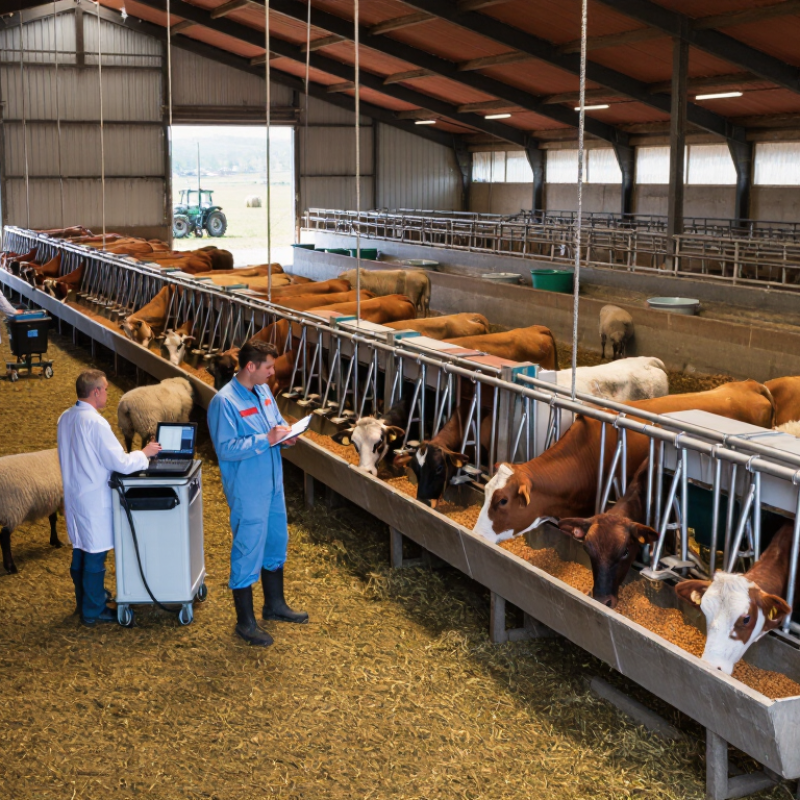
Assess Current Feed Intake and Animal Performance
Tip 1: Measure before changing the ration. Record feed offered, refusals, and dry matter content each day. A full trough does not prove efficient feeding. Wet silage can vary considerably, so weigh samples and adjust intake calculations.
Track animal performance beside intake. Record body weight, average daily gain, milk yield, egg production, or body condition scores. Use the same scale, schedule, and handling method whenever possible. Small inconsistencies can distort the trend. They matter.
Tip 2: Compare similar animals. Separate results by age, breed type, production stage, and health status. A growing group and a late-lactation group should not share one benchmark. Review at least two weeks of records before making a major decision. Longer monitoring is better when weather or forage quality changes.
Look closely at the feed bunk. Sort the remaining ration by hand and check for dust, long fibers, heating, or mold. Also inspect water flow and cleanliness. Poor water access can reduce intake before feed appears to be the problem. This is easy to miss.
Tip 3: Use the data with professional judgment. A sudden intake drop may reflect heat stress, illness, transport, or a mixing error. Do not correct the ration blindly. Ask a qualified livestock nutritionist or veterinarian to review unusual results. I would also question my own measurements; one careless weighing can create a confident, wrong conclusion.
Feed efficiency begins with a ration built for the animal in front of you. Cattle, sheep, goats, and poultry do not use nutrients in the same way. A growing calf needs protein and energy for lean tissue, while a mature dairy cow needs nutrients for milk production and body maintenance.
Tip 1: Match the ration to species, age, weight, and production stage. A high-energy mix may help finishing cattle but waste money in dry animals. Measure feed intake when possible. Small details matter.
Tip 2: Define the production goal before changing ingredients. Growth, milk yield, egg production, wool, and maintenance require different nutrient targets. Use forage tests instead of judging hay by color alone. A dusty bale can hide poor digestibility. Work with a qualified livestock nutritionist or veterinarian, especially when changing protein, minerals, or fiber levels.
Tip 3: Introduce new rations gradually. Sudden changes can reduce intake and disturb rumen function. Keep clean water available, and check feeders every day.
I have learned that perfect calculations still need farm observation. Animals may sort a mixed ration, spill feed, or leave coarse pieces behind. Record refusals, body condition, growth, and manure consistency. Review these notes weekly. My own early checks were too infrequent. That mistake cost feed.
Tip 4: Adjust carefully, not emotionally. A ration that looks efficient on paper may fail under heat, mud, illness, or competition at the feeder. Monitor individual groups when possible, because young, weak, and dominant animals rarely perform alike.
10 Tips to Improve Feed Efficiency in Livestock
Improve Forage Quality and Reduce Feed Waste
Feed efficiency starts with forage, not expensive supplements. Test hay or silage for dry matter, protein, fiber, and mold before changing the ration. Harvesting forage at the right maturity often improves digestibility and intake. Store bales on raised surfaces, under cover, and away from leaking walls. A damp corner can quietly spoil several weeks of feed. Remove visibly damaged material promptly. Do not assume animals will safely sort around it.
Measure moisture regularly, especially after heavy rain. An inconsistent dry matter level can change the ration without warning. Adjust quantities using accurate scales, and check scale calibration monthly. Keep particle size fairly uniform to limit sorting at the feed bunk. Very fine feed may increase waste and dust. Very coarse forage can leave long stems behind.
Feed at consistent times and push the ration toward animals several times daily. Fresh, evenly distributed feed encourages more animals to eat together. Track refusals by weight, not by appearance. Aim for a small, planned leftover amount, then adjust the next delivery. I once treated a large refusal pile as normal; it was actually a storage and mixing problem. That mistake cost feed and time. Review leftovers, manure consistency, body condition, and milk or weight records together. A qualified livestock nutritionist or veterinarian can help interpret unusual changes. Perfect systems do not exist. Staff observations still matter, and some useful details are easy to miss.
Better forage quality generally increases dry matter digestibility while consistent harvesting, storage, mixing, and bunk management can reduce feed waste. The values shown are practical planning benchmarks for livestock operations, not company-specific results.
Feed efficiency improves when routines match animal behavior, labor capacity, and weather. On one farm I managed, cows wasted less feed after we moved delivery to cooler morning hours. That change was simple. Use consistent feeding times, weigh ingredients, and check refusals before adjusting portions. Small records reveal patterns that memory misses. Note weather, pen conditions, intake, and leftover feed each day. A qualified nutritionist or veterinarian can help interpret unusual changes.
Storage deserves equal attention. Keep feed off the ground and protect it from rain, heat, pests, and condensation. Inspect bins and bags weekly for leaks, clumping, mold, or stale odors. Use older ingredients first, but mark delivery dates clearly. Poor rotation quietly reduces nutrient value. It can also make animals reject otherwise suitable feed.
Equipment should support accuracy, not create hidden losses. Calibrate scales regularly and inspect mixers, augers, troughs, and conveyor edges for buildup or wear. Clean contact surfaces after wet feeds, especially during warm weather. Uneven mixing can leave some animals short of protein or minerals. I once trusted a scale that was slightly inaccurate, and the mistake continued for weeks. My records were not perfect either. Build in a second check, such as comparing loaded weight with the expected ration. Watch the process. Listen for unusual motor sounds. Repair small faults before they become expensive waste.
Feed efficiency improves only when decisions follow measured results. Record daily feed offered, refusals, animal numbers, average weight, and weight gain. Use the same scale and weighing routine each time. A wet ration can weigh more without providing more nutrients. Note temperature, forage quality, health treatments, and pen changes beside the figures. These details often explain sudden feed conversion changes.
Review the records weekly, but judge trends over at least three weeks. Compare dry matter intake, average daily gain, feed conversion, and feed costs per kilogram gained. Check a sample of refusals for sorting, heating, or contamination. Small patterns matter. A full bunk at dawn may signal overfeeding, while empty space for hours may limit intake. Adjust one variable at a time, such as ration energy, feeding frequency, or batch size. Then measure the response before making another change.
Do not trust clean spreadsheets blindly. Scales drift, samples vary, and staff may record leftovers differently. Calibrate equipment regularly and train everyone to use one method. If performance falls, inspect water flow, bunk access, manure consistency, and animal comfort before changing nutrients. A feeding program may look efficient on paper yet waste feed in practice. Review targets with a qualified nutrition professional when results remain unclear, and document why each adjustment was made.
Forage often controls feed efficiency more than expensive supplements. Test dry matter, protein, fiber, and mold. A damp bale can spoil quietly.
Store bales on raised surfaces, under cover, and away from leaking walls. Keep feed protected from rain, pests, heat, and condensation. Remove damaged material promptly.
Heavy rain can change forage moisture quickly. Uneven dry matter changes the ration without warning. Measure regularly and adjust quantities with accurate scales.
Keep particles fairly uniform to limit sorting at the feed bunk. Very fine feed may create dust and waste. Very coarse forage can leave long stems.
Feed at consistent times and push fresh feed toward animals several times daily. Cooler morning delivery helped reduce waste on one farm I managed. Simple changes matter.
Weigh leftovers instead of judging them by appearance. Aim for a small, planned amount, then adjust the next delivery. I once accepted a large pile as normal. It was not.
Inspect bins and bags weekly for leaks, clumping, mold, and stale odors. Mark delivery dates clearly. Use older ingredients first. Rotation is easy to forget.
Calibrate scales regularly and inspect mixers, augers, troughs, and conveyors. Check for buildup or worn edges. Compare loaded weight with the expected ration. Listen for odd motor sounds.
Record weather, pen conditions, intake, refusals, manure consistency, body condition, and milk or weight changes. Small records reveal patterns memory misses. The system will not be perfect. Staff observations still count.
Improving feed efficiency is essential for reducing costs, supporting animal health, and achieving consistent production results. The first step in learning how to improve feed efficiency in livestock is to evaluate current feed intake, weight gain, milk or egg production, and overall animal condition. Rations should then be balanced according to each species, age group, growth stage, and production goal, ensuring that animals receive the right amount of energy, protein, minerals, and vitamins without unnecessary excess.
High-quality forage can improve digestion and reduce the need for additional feed, while careful harvesting and proper storage help prevent spoilage and nutrient loss. Producers should also minimize waste by using suitable feeders, maintaining equipment, and offering feed at appropriate times and quantities. Finally, regularly recording feed use and animal performance allows the feeding program to be adjusted as conditions change. Continuous monitoring helps identify inefficiencies early and supports healthier animals, better productivity, and more sustainable farm management.
Lenavax Nutrition