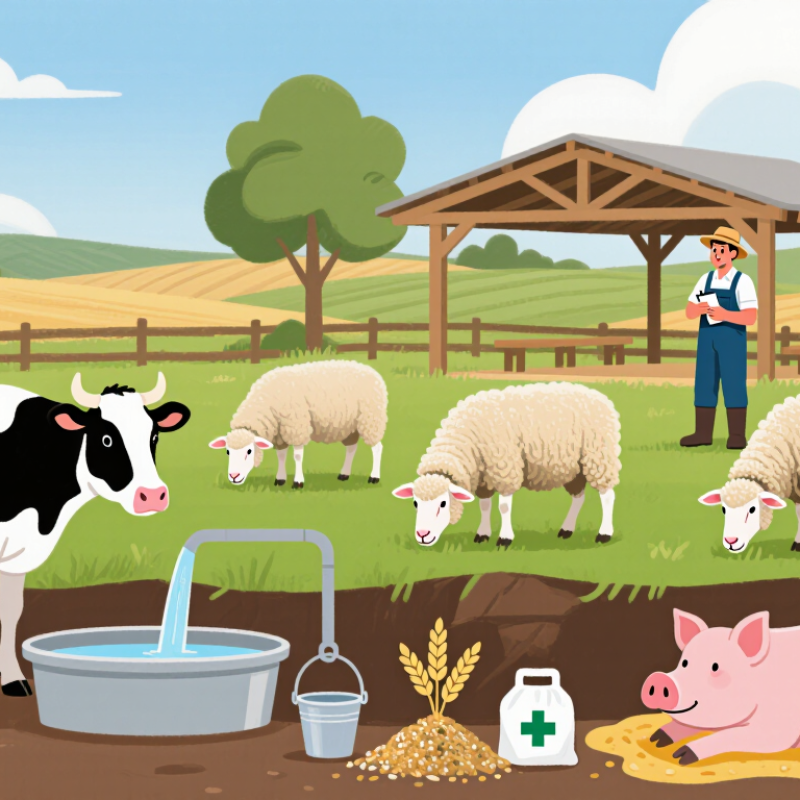
In 2026, how to enhance livestock productivity naturally begins with the conditions animals experience every day. Clean water, balanced feed, dry bedding, and enough space are practical foundations, not fashionable extras. A dairy cow should reach a clean trough without competition; a grazing herd needs shade and pasture suited to its season. Small details matter. So does steady observation. Changes in appetite, movement, or milk yield can signal trouble before a larger loss occurs.
Animal scientist and livestock-handling expert Temple Grandin has said, “I think using animals for food is an ethical thing to do, but we’ve got to do it right.” That principle connects animal welfare with responsible production. Farmers can support both through careful breeding, low-stress handling, pasture management, and preventive veterinary care. Local climate and available resources matter, so a method that works on one farm may fail on another. There is no universal recipe.
This guide explores practical choices for improving health, reproduction, feed efficiency, and resilience without relying on quick fixes. It also considers recordkeeping, because a simple notebook tracking feed intake, body condition, and treatment dates can reveal useful patterns. Still, good intentions do not guarantee good outcomes. Natural approaches need measurement, expert guidance, and regular review. Some results take time; others may disappoint. That uncertainty deserves attention, not a glossy promise.
Benchmark Herd Performance: Livestock Generates 40% of Farm Output Value (FAO)
FAO’s 2018 report, World Livestock: Transforming the Livestock Sector through the Sustainable Development Goals, estimates that livestock contributes about 40% of global agricultural output value. This is a global benchmark, not a promise for every farm or herd. Productivity depends on species, climate, feed costs, and management. A practical natural approach starts with daily basics: clean water, balanced forage, dry bedding, and enough space to rest. Observe animals at feeding time. A cow that hangs back or a lamb with a rough coat may need attention before weights fall.
Tips: Test forage quality and adjust rations with a qualified animal nutritionist. Keep simple records of weight, body condition, births, and illness. Review trends monthly, not just at sale time. Small changes count. Regular veterinary checks and locally appropriate parasite monitoring support health; avoid treating every animal without a clear reason. I once underestimated how quickly muddy water points reduced intake. It was an avoidable oversight.
The FAO figure highlights why herd performance matters to farm income, but value is not the same as profit. Track feed use and animal growth together, then compare results across seasons. A smaller, healthier herd can outperform a larger one when forage is scarce. Don’t assume one grazing plan fits every field. Rotate pasture where practical, allow plants time to recover, and watch for bare patches near gates and troughs. Review the results honestly, including the weeks when a plan did not work.
Balance Forage-First Diets: Livestock Foods Provide 37% of Global Protein (FAO)
How to Enhance Livestock Productivity Naturally in 2026
Balance Forage-First Diets: Livestock Foods Provide 37% of Global Protein (FAO)
Good feeding starts with what grows nearby. Grasses, legumes, and conserved hay can form the base of many ruminant diets, but forage quality changes with season and harvest. Test dry matter and nutrient levels; then match the ration to species, age, and production stage. A green pasture can still be short on energy or minerals. Looks can mislead.
The FAO’s 2023 assessment of terrestrial animal-source foods estimates they provide 37% of global protein and 18% of calories. That contribution makes efficient feeding important, not simply bigger feed portions. Track body condition, growth, milk yield, and feed refusals each week. Keep clean water available, and use mineral supplements when forage analysis shows a gap. Small checks matter.
Forage-first does not mean forage-only. Young, pregnant, or high-producing animals may need carefully balanced supplements. FAO’s 2023 Pathways report estimates livestock agrifood systems produced 6.2 billion tonnes of CO2-equivalent emissions in 2015, around 12% of human-caused emissions. Better feed use can support productivity, though results vary by farm and climate. It is easy to oversimplify “natural” feeding; local testing and good records are less romantic, but more useful.
Prevent Disease Early: Animal Diseases Cause 20% of Livestock Losses (FAO)
How to Enhance Livestock Productivity Naturally in 2026
Animal diseases can quietly reduce farm output before obvious symptoms appear. FAO has estimated that diseases cause about 20% of global livestock production losses. That is not a small gap. A coughing calf, reduced feed intake, or a sudden drop in egg production deserves attention. Early checks help farmers respond before illness spreads through a pen or herd.
Walk through housing daily and note changes in appetite, movement, breathing, manure, and milk yield. Keep simple records; yesterday’s feed intake can reveal what a hurried glance misses. Separate animals showing possible illness, and seek advice from a qualified veterinarian rather than guessing at treatment. Clean water, dry bedding, good ventilation, and sensible stocking levels support natural resilience. No checklist catches everything.
Prevention also depends on routine biosecurity. Clean boots and equipment between groups, manage new arrivals carefully, and follow locally appropriate vaccination and parasite-control plans with veterinary guidance. WOAH emphasizes surveillance and early reporting as important tools for limiting animal disease spread. A written health log makes patterns easier to spot, especially when several people share daily care. Small signs matter. Some farms may not have perfect records or enough staff; that is worth confronting, not hiding. Start with a few observations you can reliably track, then improve the routine as time allows.
Select Resilient Breeds: Match Genetics to Local Climate and Feed
Resilient livestock begin with genetics suited to the farm, not simply with a breed praised for high output. An animal that handles local heat, humidity, or winter conditions may need less intervention to stay productive. In hot regions, look for traits such as heat tolerance, sound feet, and steady feed intake. In colder areas, coat, body condition, and shelter access also matter. Local fit matters.
Match those traits to the feed animals can reliably get. If pasture dries out each summer, ask whether a breed maintains condition on rough forage, rather than assuming lush grass will always be available. Small details matter. Check regional performance records, talk with nearby producers, and ask a veterinarian or livestock adviser about health risks in your area. Compare fertility, survival, and growth—not just the largest animal at sale.
Keep simple records after choosing stock: birth dates, weight changes, feed use, illness, and weather conditions. Review them across seasons before expanding a herd or flock. No choice is perfect. A breed may suit the climate but still perform poorly under a particular feeding routine, so adjust gradually and watch animal condition. Test a small group first when possible; local results can challenge even sensible assumptions.
How to Enhance Livestock Productivity Naturally in 2026
Select resilient breeds by matching genetics to local climate and feed resources.
Typical mature cow weights are approximate and vary by genetics and management. Smaller cows generally require less total feed, but weight alone does not measure heat tolerance or productivity. Consider local climate, forage quality, health, and production goals when choosing a breed.
Recycle Manure Wisely: Test Soil and Nutrients Before Field Application
How to Enhance Livestock Productivity Naturally in 2026
Manure can return valuable nutrients to fields, but its nutrient content varies with animal type, bedding, feed, and storage. The U.S. Environmental Protection Agency’s 2003 manure-management report estimated that livestock generated about 1.37 billion tons of manure annually. That national estimate is not a recipe for your fields. Test each manure source before spreading it.
Collect a representative sample from well-mixed manure, following your laboratory’s instructions. Test field soil too, especially for phosphorus and potassium. USDA Natural Resources Conservation Service Conservation Practice Standard 590 uses soil tests and manure nutrient analyses to guide nutrient planning. Match application rates to crop needs, soil-test results, and the nutrients already in manure. Keep records of sample dates, results, and field applications. Small errors add up. A sample can still miss a wet corner or a nutrient-rich layer, so careful mixing matters. Retest when manure storage, feed, or bedding changes; revisit the plan when yields or soil results shift. This takes effort. But avoiding excess nutrients can protect water while making manure a more dependable part of the fertility plan.
How to Enhance Livestock Productivity Naturally in 2026 - Recycle Manure Wisely: Test Soil and Nutrients Before Field Application
| Field |
Planned Crop |
Soil pH |
Soil Test P
(mg/kg) |
Lab P Status* |
Manure Nutrient Test
(lb/ton, as received) |
Crop P₂O₅ Recommendation
(lb/acre) |
Illustrative Manure Rate
(ton/acre) |
Estimated First-Year N
(lb/acre) |
Field Application Guidance |
| North field |
Corn silage |
6.3 |
18 |
Optimum |
Beef solid: total N 11; P₂O₅ 8; K₂O 12 |
50 |
6.25 |
34
(5.5 lb available N/ton × 6.25) |
Rate is calculated to meet the example P₂O₅ recommendation. Credit manure nitrogen when planning any additional fertilizer. |
| Meadow field |
Grass hay |
6.1 |
12 |
Low |
Dairy solid: total N 10; P₂O₅ 10; K₂O 12 |
45 |
4.5 |
18
(4 lb available N/ton × 4.5) |
Use the soil-test recommendation to guide phosphorus application. Avoid applying on saturated or frozen ground. |
| Creekside pasture |
Established pasture |
6.8 |
35 |
High |
Beef solid: total N 11; P₂O₅ 8; K₂O 12 |
0 for this example |
0 based on P |
0 from manure at this rate |
Do not apply phosphorus-based manure where the local soil-test recommendation is zero. Follow local nutrient-management guidance. |
*Soil-test phosphorus categories and crop recommendations vary by region and laboratory. Figures are illustrative examples, not field-specific prescriptions. Test each manure batch, use current soil-test results, and confirm application rates with local agronomic guidance. Actual nutrient availability depends on manure handling, storage, timing, and application method.
FAQS
Grasses, legumes, and conserved hay can anchor many diets. Forage quality changes with the season and harvest.
Test dry matter and nutrient levels before adjusting a ration. Green pasture may still lack energy or minerals. Looks can mislead.
No. Young, pregnant, or high-producing animals may need balanced supplements. Match them to the animal’s needs.
Check body condition, growth, milk yield, and feed refusals. Keep clean water available. Use minerals when testing shows a gap.
A 2023 assessment estimated 37% of global protein and 18% of calories. Efficient feeding matters more than simply offering larger portions.
Match animal traits to local climate and dependable feed. Heat tolerance and sound feet can help in hot regions. Cold areas need suitable coats, body condition, and shelter.
Note birth dates, weight changes, feed use, illness, and weather. Compare results across seasons before expanding. Local records can still be messy.
No. Better feed use may support productivity, but results vary by farm and climate. Even careful plans can miss something.
Conclusion
How to enhance livestock productivity naturally begins with understanding current herd performance. Since livestock contributes about 40% of farm output value, track indicators such as health, growth, fertility, and feed use to identify where practical improvements are needed. Build diets around suitable forage, then balance them with other locally available feeds to meet animals’ nutritional needs. Livestock foods provide roughly 37% of global protein, making efficient, healthy production important for both farms and communities.
Prevention and adaptation are equally valuable. Regular observation, clean housing, sound nutrition, and timely veterinary guidance can help reduce disease risks, which account for an estimated 20% of livestock losses. Choose resilient breeds suited to local climate, pasture, and feed availability rather than relying on genetics alone. Finally, recycle manure responsibly: test soil and manure nutrients before field application, and use results to guide rates and timing. These connected steps support healthier animals, productive land, and more resilient farms.

 Lenavax Nutrition