In the world of agriculture, understanding "what is the difference between organic and synthetic fertilizer" is crucial. Experts like Dr. Emily Barr, a renowned agronomist, highlight this distinction. She states, “Choosing the right fertilizer is essential for plant health and sustainability.” Organic fertilizers come from natural sources, promoting soil health. They enhance microbial activity and improve water retention.
Conversely, synthetic fertilizers are chemically manufactured and often provide quick nutrient boosts. However, they may lead to nutrient runoff and soil degradation. Farmers face tough decisions when balancing immediate crop needs with long-term soil health.
The choice between these fertilizers reflects broader environmental considerations. Each option has its pros and cons. Misunderstanding either type can lead to less effective agricultural practices. As we explore this topic, it’s vital to reflect on the impact of our choices in farming.
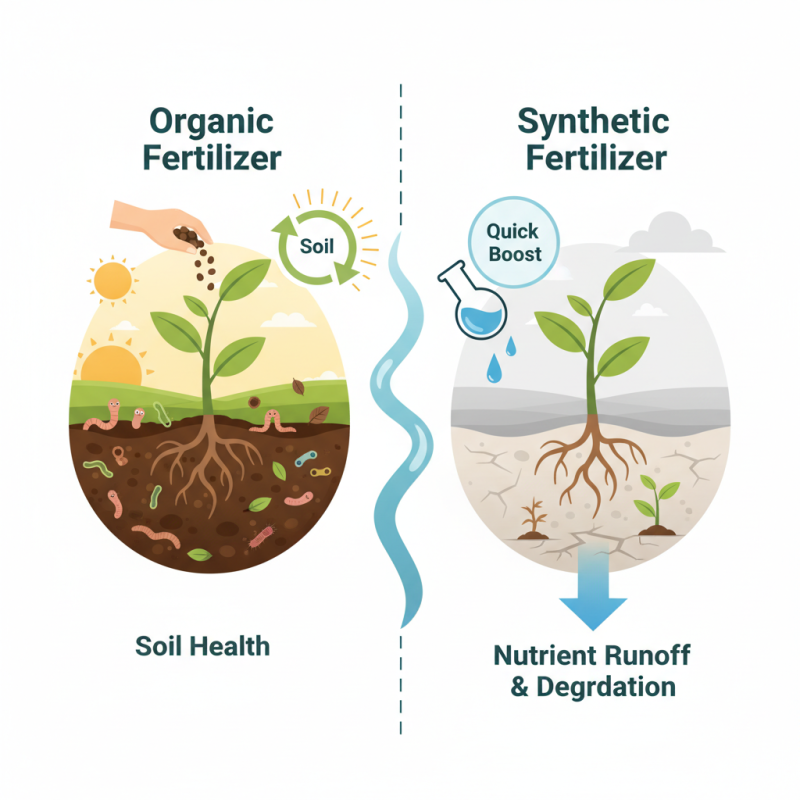
Organic fertilizers are derived from natural sources, primarily plant and animal matter. They contain key components such as nitrogen, phosphorus, and potassium. According to the Organic Trade Association, the organic fertilizer market has been growing steadily, reflecting increased demand for sustainable agriculture. Farmers often prefer organic options because they enhance soil structure and promote biodiversity.
These fertilizers rely on materials like compost, manure, and bone meal. They provide a slow release of nutrients, which is advantageous for plant health. Research indicates that organic fertilizers can improve soil microbial activity, vital for nutrient absorption. However, there is a downside; nutrient levels can be inconsistent, leading to possible nutrient deficiencies in crops if not managed properly.
Furthermore, the application of organic fertilizers requires careful timing and method. The Nutrient Management Institute highlights that improper use can lead to reduced crop yields. While the benefits are significant, the need for balance and understanding of soil types is crucial. This complexity means that farmers must be willing to invest time and resources in their soil management practices to ensure optimal results.
Synthetic fertilizers are man-made substances designed for crop nourishment. They contain key components such as nitrogen, phosphorus, and potassium. According to the Food and Agriculture Organization (FAO), in 2021, global synthetic fertilizer consumption reached approximately 186 million tons. This figure highlights the pervasive reliance on these fertilizers in modern agriculture.
Nitrogen is crucial for plant growth and is often in the form of urea or ammonium nitrate. Phosphorus promotes root and flower development. Potassium enhances overall plant health. The availability of these nutrients allows for increased yields. However, over-reliance on synthetic fertilizers can lead to soil degradation and nutrient runoff into waterways. A 2020 report by the International Fertilizer Association noted that improper use can create long-term soil fertility issues.
There is a growing debate among farmers and scientists about the sustainability of synthetic fertilizers. Many acknowledge their efficiency but stress the potential risks. Balancing the benefits and challenges is essential. Understanding the components in synthetic fertilizers and their environmental impacts is vital for responsible agricultural practices. Educating stakeholders remains an ongoing challenge.
This chart compares organic and synthetic fertilizers based on five key dimensions: Nutrient Content, Impact on Soil, Environmental Effects, Cost, and Release Speed. Each dimension is rated as a percentage to illustrate the differences between the two types of fertilizers.
Nutrient release rates in fertilizers play a critical role in soil health and plant growth. Organic fertilizers typically release nutrients slowly, improving soil structure and promoting microbial activity. According to data from the USDA, organic fertilizers can take several weeks to months to fully break down, depending on environmental conditions such as moisture and temperature. This gradual release helps in preventing nutrient runoff, which can be a significant issue with synthetic counterparts.
In contrast, synthetic fertilizers provide immediate nutrient availability. They often contain higher concentrations of nutrients that plants can absorb quickly. A study from the International Fertilizer Association highlights that synthetic fertilizers can release nutrients in a matter of days. However, the rapid nutrient release can lead to leaching, causing environmental concerns. Reports indicate that about 30% of synthetic nitrogen can be lost to the environment, which raises questions about sustainability.
While both types have distinct advantages and disadvantages, the best approach often involves a combination of both. Many farmers are reevaluating their fertilizer strategies to balance immediate plant needs and long-term soil health. This complexity in choosing fertilizers requires careful consideration and often leaves growers questioning the best path forward.
The environmental impact of fertilizers is significant. Organic fertilizers come from natural sources, like compost and manure. They improve soil health, enhancing its water retention and microbial activity. However, they can be slow to act. Nutrient release depends on various factors. This can lead to nutrient deficiency in some crops.
On the other hand, synthetic fertilizers provide immediate nutrient availability. This can lead to quick growth. Yet, their excessive use poses serious risks. They can cause soil degradation and water pollution. Runoff from fields can lead to algal blooms, harming aquatic ecosystems. Balancing the use of both types is essential for sustainable agriculture.
Farmers often face tough decisions. Each option has pros and cons. Understanding local soil conditions is vital. This can guide them toward responsible choices. Our agricultural practices need reflection, emphasizing the long-term health of our environment.
| Aspect | Organic Fertilizer | Synthetic Fertilizer |
|---|---|---|
| Source | Natural sources (compost, manure) | Chemical processes |
| Nutrient Release | Slow and gradual | Quick and immediate |
| Soil Health | Improves soil structure and microbial activity | Can degrade soil quality over time |
| Environmental Impact | Lower; sustainable practices | Higher; potential for runoff and pollution |
| Cost | Generally higher | Usually lower |
| Usage | Best for long-term fertility and sustainability | Best for immediate results and specific nutrient needs |
Organic and synthetic fertilizers each have distinct cost-effectiveness and accessibility factors. Organic fertilizers often come from natural sources. They include compost, manure, and bone meal. These materials typically cost more to produce and process. This raises their price for consumers. However, many farmers view them as worth the investment. They improve soil health in the long run. This can lead to increased crop yields over time.
Synthetic fertilizers, on the other hand, are usually less expensive. They can be produced at larger scales and are widely available. Farmers appreciate their immediate impact on plant growth. However, they may degrade soil health over time. Some farmers find them essential, while others prefer organic options. Accessibility varies by region. Some areas have better access to organic materials, while others rely heavily on synthetic fertilizers.
Choosing the right type of fertilizer is complex. It often depends on specific farming practices and goals. Costs fluctuate based on supply and demand, impacting both options. Reflecting on these factors can guide farmers in making informed decisions. Each approach has benefits and drawbacks, requiring careful consideration.
: Organic fertilizers release nutrients slowly over weeks or months, while synthetic fertilizers offer immediate nutrient availability in days.
This gradual process improves soil structure and promotes microbial activity, helping to prevent nutrient runoff.
Rapid nutrient release can lead to leaching, causing about 30% of synthetic nitrogen to be lost to the environment.
Organic fertilizers are generally more expensive due to their natural sources and production methods, yet many find them worthwhile for long-term health.
Accessibility varies; some areas can easily access organic materials, while others predominantly rely on synthetic fertilizers.
They believe organic fertilizers lead to improved soil health and increased crop yields over time, despite higher upfront costs.
They should reflect on specific farming practices, cost fluctuations, and the long-term effects on soil health and crop needs.
Yes, combining both can balance immediate plant needs with long-term soil health goals, though it complicates decision-making.
Understanding the balance between the quick benefit of synthetic fertilizers and the long-term benefits of organic options can be confusing.
There’s a need to evaluate both immediate results and the sustainability of their fertilizer choices for future farming success.
The article titled "What is the Difference Between Organic and Synthetic Fertilizer?" explores the essential distinctions between these two types of fertilizers. Organic fertilizers are derived from natural sources and contain key components such as plant or animal matter, which enhance soil health and provide nutrients over time. In contrast, synthetic fertilizers are chemically manufactured and typically offer immediate nutrient availability, resulting in quicker plant response.
The comparison highlights various factors, including nutrient release rates, environmental impacts, and cost-effectiveness. Organic fertilizers tend to release nutrients gradually, which benefits long-term soil vitality, while synthetic options provide rapid nutrient boosts but may lead to environmental challenges if overused. Additionally, the discussion covers the accessibility of both types, emphasizing their respective advantages and considerations for gardeners and farmers in choosing the right fertilizer for their needs.

Lenavax Nutrition